Why we made this
The best teams don't lose the thread between meetings. We wanted the same to be true once the team includes a few agents and a handful of repos.
Workspaces, not sessions
Close the tab, restart your machine, come back next week — the worktree, the conversation, and the agents you assigned are all still exactly where you left them.
Hand-offs, not shared state
Agents talk to each other the same way people do — a clear message left where the right one will see it, never a black box they both quietly share.
Multiple features in parallel
Every workspace checks out its own worktree, so agents can work across the same codebase at once — each on its own branch, none stepping on what the others are building.
Context that compounds
Every convention written down and every lesson remembered stays around for next time, so the tenth agent to touch a part of your code already knows more than the first one did.
See for yourself
A quick look at what actually shows up on screen — before you take our word for the rest.
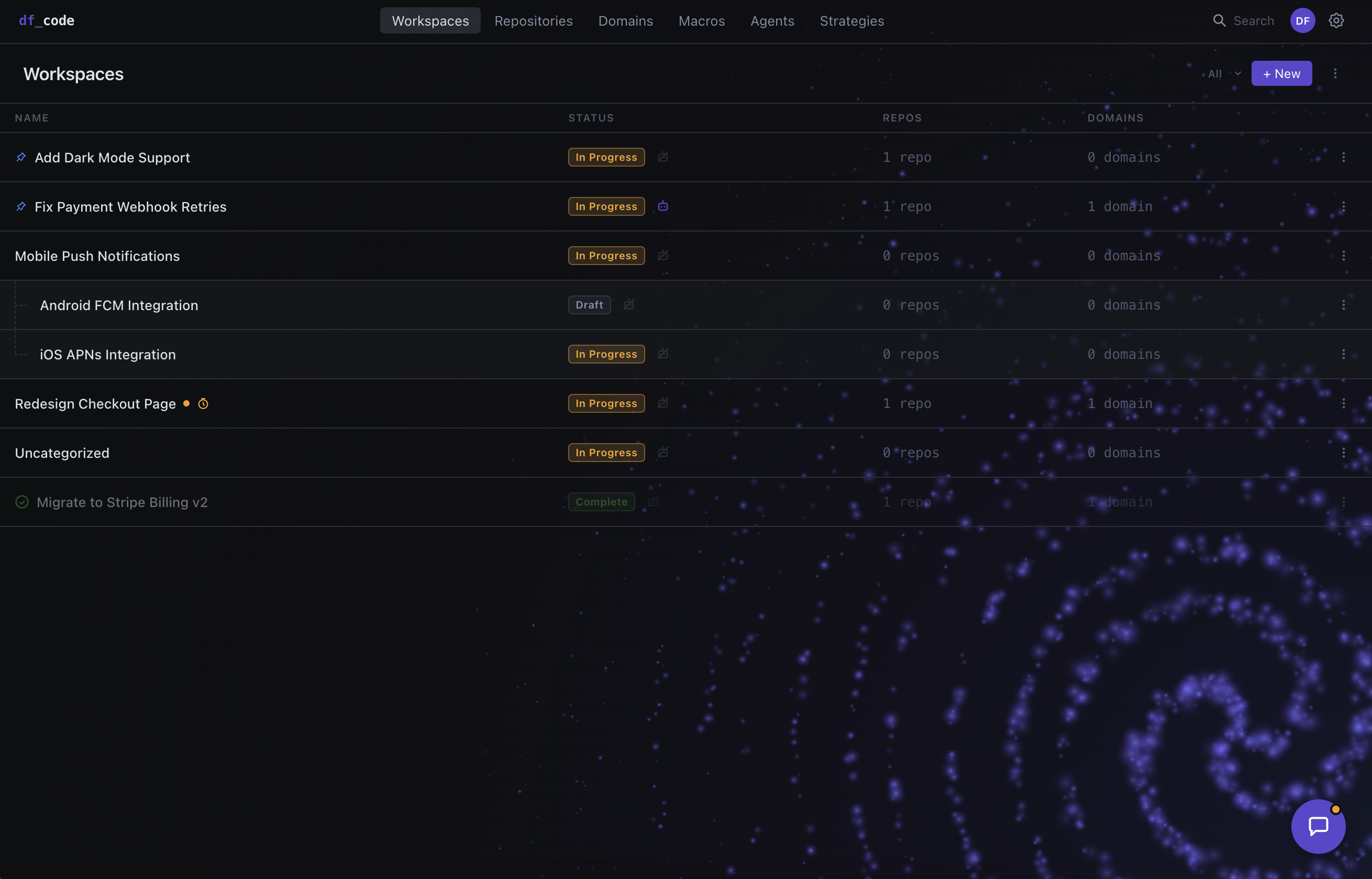
Every project, one screen
See what's in progress, what's waiting on you, and what's already been handed to an agent — across every workspace, without opening a single one.
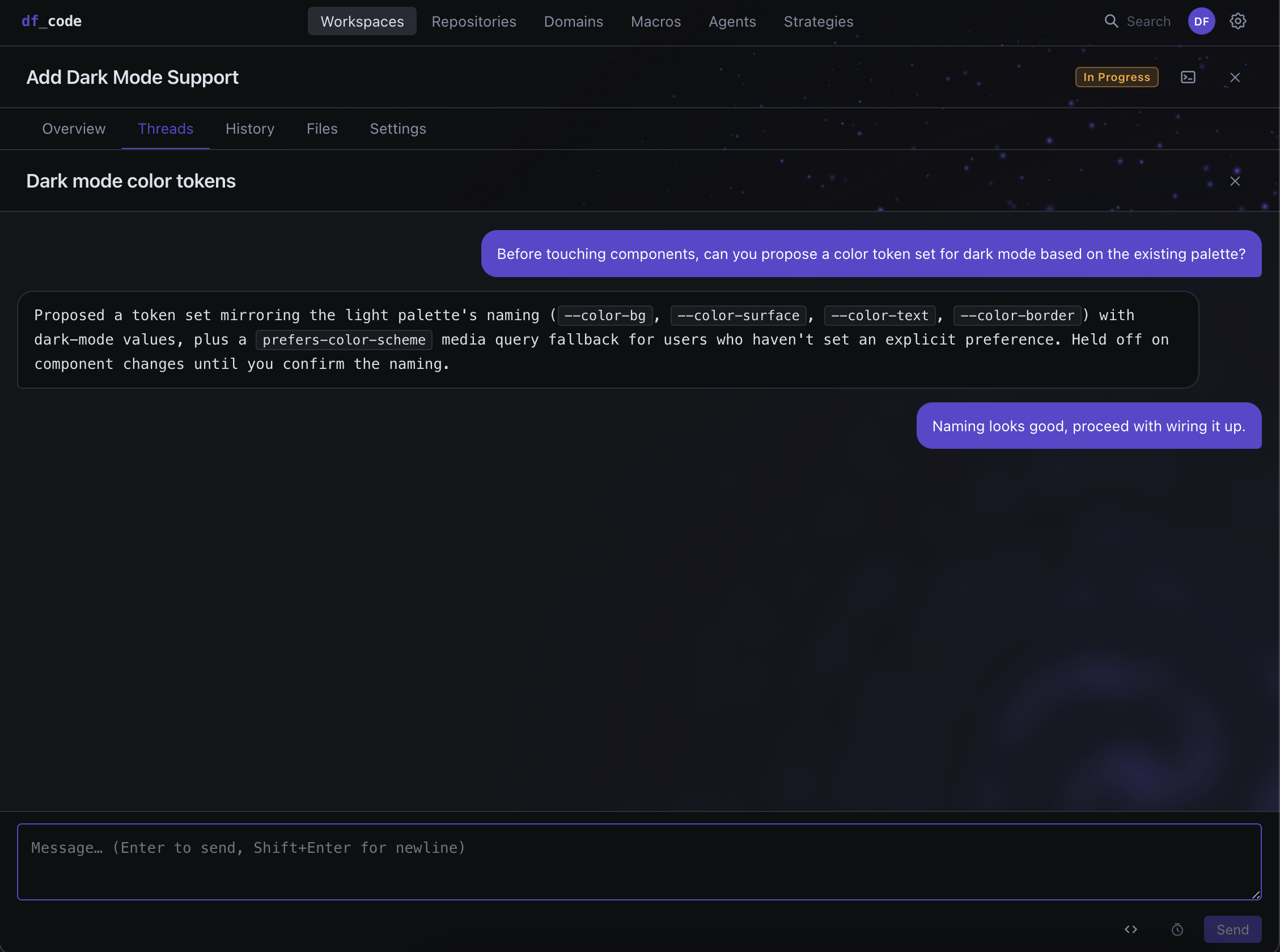
Simplified context management
Every conversation stays contained to the run it belongs to, so jumping between threads never means losing your place. Step away mid-task, pick up an entirely different one, and come back later to find the full history exactly where you left it — nothing to scroll back through, nothing to re-explain.
Every generation inherits the tools of the last — and mostly uses them to build the same things a little faster.
We want to build the tools that make entirely new things possible. AI isn't the destination. It's a new material, the way electricity, the camera, and the printing press once were. So the question we ask isn't how to automate yesterday — it's what becomes possible now.
We don't build tools to help people work the old way.
We build tools that help people discover entirely new ways to create.